
by Nicholas Mitsakos | Artificial Intelligence, Book Chapter, Innovation, Investment Principles, irrationality, Technology, Transformative businesses, Writing and Podcasts
AI is extraordinary. The economics are not.
Artificial intelligence has triggered the largest coordinated capital commitment of the modern technology era. The builders will spend close to $800 billion this year and approach $1 trillion next year on chips, data centers, networks, and power. Total AI revenue this year will be roughly $150 to $200 billion.
AI will reshape the global economy, and much of the capital financing that transformation will be impaired. Revenue, productivity, and cash flow will all arrive, but on the wrong schedule, after much of what was built to capture them has lost its economic value.
We have seen this movie. Railroads. Telephone and wireless networks. Fiber. The commercial internet. Each transformed the economy. Each destroyed the capital of those who built it first. The infrastructure survived. The investors did not.
The question is not whether the AI opportunity is real. The question is who pays for the gap between when the capital is spent and when the value arrives. AI may define this era. The uncertainty is whether today’s owners, creditors, communities, and ratepayers capture enough of its value to justify what they’re building with their capital.

by Nicholas Mitsakos | AI Agents, Artificial Intelligence, Biotechnology, Book Chapter, crispr, drug discovery, Health Care, Transformative businesses, Writing and Podcasts
AI cures disease only if the cures already are within a set we have measured, waiting for a better approach. One problem: they do not. Most of human biology has never been observed with detail and understanding sufficient to target a therapy. No amount of inference recovers data that was never collected. The need for AI in life sciences and drug discovery is indisputable. Of roughly ten thousand known human diseases, the large majority have no approved therapy at all; among rare diseases, the figure approaches ninety-five percent. Most approved drugs slow a disease rather than stop it. For the bulk of human illness, medicine offers management or nothing. Humans are systems, and the hardest diseases are within human systems and unsolved. The constraint is not intelligence. It is understanding the system.

by Nicholas Mitsakos | Artificial Intelligence, Book Chapter, Innovation, Writing and Podcasts
AI and real-world visual understanding remain unsolved. Machines can recognize a face, caption a photograph, describe a scene, and outperform radiologists on narrow diagnostic tasks. So, if machines can see what we see, they must be doing what we do. They don’t. Nature does not produce straight lines, perfect circles, or right angles. AI lacks comprehensive human visual reasoning.

by Nicholas Mitsakos | Artificial Intelligence, Biotechnology, Book Chapter, Health Care, Innovation, Science, Transformative businesses, Writing and Podcasts
Artificial intelligence is no longer a tool that the life sciences industry is adopting. It is a force that is relocating where value is created and who captures it. Three costs are collapsing at once: drug discovery, company independence, and the ability to reach the patient. Each of these costs was, for forty years, a moat protecting the incumbents who could afford to pay it. In addition, the capacity to discover and manufacture medicine has become a strategic infrastructure in the same category as energy, semiconductors, and compute. The molecule has become computable. The architecture of value creation in life sciences has changed.

by Nicholas Mitsakos | Artificial Intelligence, Biotechnology, Book Chapter, drug discovery, Health Care, Innovation, software, Writing and Podcasts
Artificial intelligence is reducing the time and cost required to discover new drug candidates. New forms of late-stage capital are allowing better companies to stay independent longer. Direct-to-patient distribution is weakening Pharma’s control of the commercial channel. Together, these changes alter the architecture of biotechnology. The molecule is being separated from the old machine that used to deliver it. This is a structural change in how drugs are discovered, financed, developed, negotiated, and delivered. Biotech companies will build discovery systems, develop clinical evidence, control proprietary data, preserve financing options, and reach patients more directly.
by Nicholas Mitsakos | Artificial Intelligence, Book Chapter, China, energy, Globalization, Innovation, irrationality, uncertainty, Writing and Podcasts
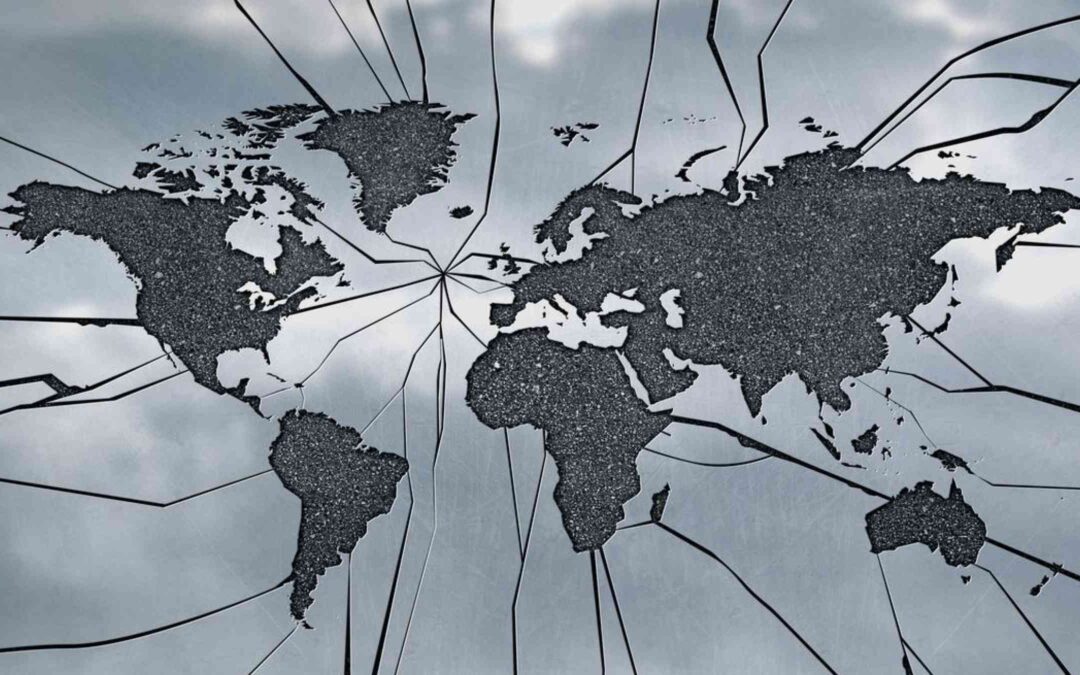
Albert Camus’s warning from nearly 80 years ago, that humanity is subordinate to abstraction, people are replaced by calculations, and the willingness to accept suffering as an administrative variable persists. We have industrialized the human crisis. We are at an inflection point where the consequences of our choices, both good and bad, will arrive faster, hit harder, and spread more widely than any prior moment in history. We have the proven capacity to recover from previous crises. The question is whether the next crisis potentially makes recovery impossible.
by Nicholas Mitsakos | AI Agents, Artificial Intelligence, Book Chapter, drug discovery, energy, Financial Technology, Health Care, Innovation, Robotics, Transformative businesses, Writing and Podcasts
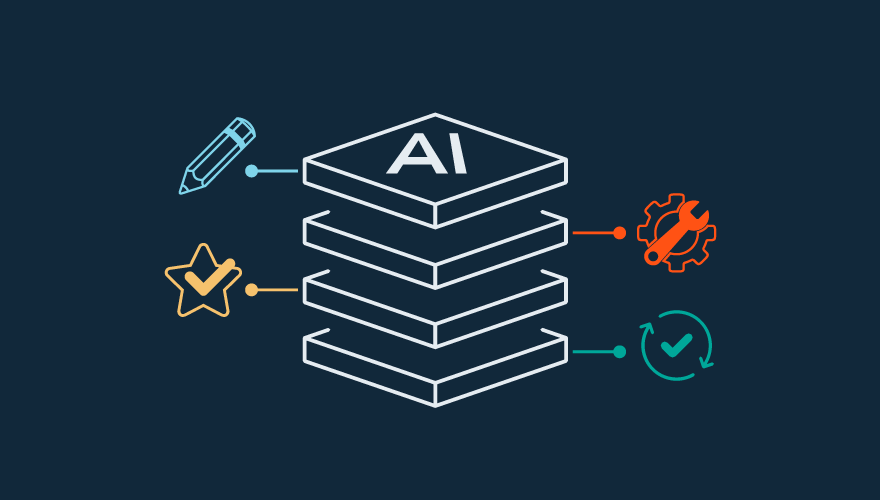
Artificial intelligence is a stack: energy, silicon, cloud, models, and applications. Each has its own economics, competitive dynamics, and challenges. Mistaking one layer for the whole industry causes confusion, misrepresentation, bad decisions, and misguided capital allocations. The infrastructure builders enable the platform; the application builders capture the value. The question is now, what value does all this deliver? Energy, silicon, cloud, and models only serve to deliver that product. There is a robust argument that we are at the beginning of an unprecedented value-creation curve. Built on the infrastructure and services provided by the other layers of the stack, the AI application layer will be globally transformative and disruptive. The constraints are imagination, execution, and the willingness to rebuild how work is done.

by Nicholas Mitsakos | Artificial Intelligence, Book Chapter, Innovation, software, Technology, Writing and Podcasts
For the better part of three decades, enterprise software followed a remarkably stable economic logic. You built a product. You sold access to that product. You charged per seat. You expanded revenue by increasing the number of people required to operate the system. It was elegant, scalable, and wildly profitable. Now, it is breaking. It is the decoupling of software revenue from human labor. The industry continues to frame this moment as a competition between AI and software. That framing is wrong. AI is not competing with software. It is becoming the operating system for work.
by Nicholas Mitsakos | Artificial Intelligence, Book Chapter, Innovation, Investment Principles, software, Transformative businesses, Writing and Podcasts
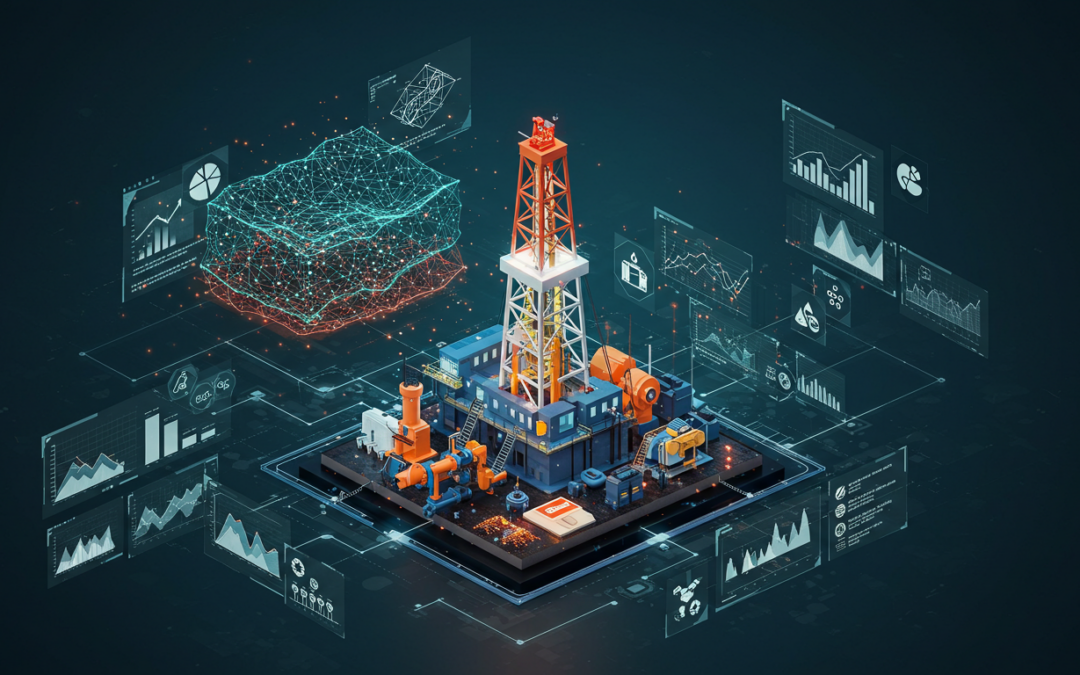
AI models produce raw intelligence. They generate tokens. But tokens are an intermediate good, not a finished product. What customers actually pay for is legal work completed, code shipped, claims processed, research synthesized, and decisions supported.
They pay for refined output.
Attention has focused on the infrastructure layer — the frontier labs, the compute stack, and the data centers. That attention is not misplaced, but it overlooks a structural shift already underway. Once you understand the model as an intermediate good rather than the end product, the center of gravity moves. The decisive question is no longer who can produce intelligence, but who can turn it into something usable, trusted, repeatable, and economically defensible.
In other words, who can refine it into a usable product?
At the base of the chain sit the token producers — OpenAI, Anthropic, Google DeepMind, Meta, DeepSeek, and Qwen. They produce raw capability. This layer is expensive to build, technically formidable, and still moving fast. But crude oil is not gasoline.
Enterprises and consumers pay for gasoline.

by Nicholas Mitsakos | Artificial Intelligence, Book Chapter, Globalization, Innovation, Physical Intelligence, software, Writing and Podcasts
Software Is the central nervous system of the global economy and its demise is greatly exaggerated. There’s a growing narrative thatsoftware is becoming commoditized. Large language models write code. Autonomous agents assemble applications. The barriers to building digital products appear to be collapsing. If software can be generated instantly, then software itself must be losing value.
This conclusion fundamentally misunderstands how technological disruptions develop and expand. Software is becoming the infrastructure layer of modern civilization. The economic, industrial, and geopolitical systems being constructed over the next three decades will not run on software. They will run as software.

by Nicholas Mitsakos | Artificial Intelligence, Book Chapter, Innovation, space, Transformative businesses, Writing and Podcasts
Space is no longer a frontier. For most of the modern era, space has been misunderstood—not technologically, but economically.
Space was a destination rather than a system and a heroic engineering challenge rather than an industrial platform with a continuous operational, and commercial potential. Many early “commercial space” narratives sought to impose venture logic on a domain that remained structurally dependent on government capital, prestige economics, and one-off missions. The result was predictable: excitement without durability, valuation without cash flow, and ambition without a stable market. Now, space is about economic persistence: building businesses that treat space not as a product but as a technological and economic stack – a physical layer supporting a stack of software services and networks.

by Nicholas Mitsakos | Artificial Intelligence, Biotechnology, Book Chapter, drug discovery, energy, Green Energy, Innovation, Robotics, Technology, Writing and Podcasts
As the era of artificial intelligence is here, it’s easy to fall into the trap of despair and fear over the loss of control and the worry that artificial intelligence is about to unleash killer robots and enslave humanity. Either that, or Artificial intelligence will improve lives, expand access to education, advance healthcare, and advance climate science, among many other improvements. Luckily, AI’s benefits greatly outweigh its costs. Nothing is free, and everything comes with a price (there are always both sides to the ledger), but the extraordinary benefits that artificial intelligence can unleash are worth the effort. It would be a mistake to slow down, pause, or restrict research, development, and AI applications. AI will not destroy the world — and it is more likely to save it.