
by Nicholas Mitsakos | Artificial Intelligence, Biotechnology, Book, China, commodities, Digital Assets, Economy, Financial Technology, Public Policy, Russia, Technology, Transformative businesses, Writing and Podcasts
This book explores the next decade’s more frequent and intense economic, geopolitical, fiscal, and market volatility, technological innovation, disruption, and hype.
Long-term opportunity exists, and this book uses a 10-year horizon as a surrogate for a long-term perspective. Some of the world’s most important industries are being disrupted, especially finance via digital assets and Blockchain-based businesses, life sciences via gene editing, DNA sequencing, and CRISPR, and communications via advanced wireless data networks, software technologies including artificial intelligence, and new interactive platforms such as the Metaverse.

by Nicholas Mitsakos | Artificial Intelligence, Financial Technology, Technology, Transformative businesses, Writing and Podcasts
The collapse of FTX shows how easily crypto is manipulated and the “crypto ecosystem” is fundamentally driven by centralized players and not any true form of decentralized or digital assets. Cryptocurrency is a sideshow and benefits no one other than speculators hoping for a greater fool. However, the combination of digital asset regulation, central-bank cooperation, and distributed assets via decentralized platforms still represents one of the most intriguing opportunities, and, with the potential disruption of global finance, one of the most exciting investment areas today.

by Nicholas Mitsakos | Artificial Intelligence, Biotechnology, Book Chapter, Finance, Financial Technology, Investment Principles, Technology, The Market, Writing and Podcasts
The onslaught of market-making bad news seems almost a daily event. A gloomy picture of slowing economic growth, elevated inflation, and confusing fiscal and monetary policy has added a lethal mixture to the market’s performance. Fiscal stimulus is sidelined, and monetary policy is constricting economic growth and entrepreneurial innovation. It makes for a gloomy outlook and an even more depressing long-term perspective. The next 10 years look more like a lost decade. High-growth company valuations have been significantly discounted, and over time as discount rates drop, their valuations are likely to increase substantially. Higher-yielding fixed income securities will be a standout performer as interest rates are reduced, the higher-yielding BDCs, REITs, leveraged loan securities, and high cash flow instruments, along with high-dividend equities, will prove extremely attractive and are currently available at bargain prices. Providers of value and users of value will be the winners for the next decade. Those generating real cash flow and disruptive innovation will define the next decade.

by Nicholas Mitsakos | Investment Principles, Technology, Transformative businesses, uncertainty, Writing and Podcasts
Predictions usually end up being nonsense. We simply draw a trajectory from what we know today. But innovation is a discontinuity. Things are unpredictable because innovation does not come from consensus thinking. It comes from small groups and individuals with a spark of entrepreneurship, intelligence, and vision. One of the fundamental tenets of predicting technology is that most forecasters get things spectacularly wrong.

by Nicholas Mitsakos | Artificial Intelligence, Economy, Green Energy, Public Policy, Technology, uncertainty, Writing and Podcasts
The rewards for innovative success have become enormous and unpalatable, especially among the five technological giants (Amazon, Apple, Facebook, Google, and Microsoft) forcing these firms to spend absurd amounts of money on lobbying in Washington DC. It’s an expensive and wasteful distraction, but essential in this brave new world. If nothing else, it clogs innovation. It is to our detriment – and the world is literally burning while politicians fiddle – and even more disastrously – impede innovative activity. Applying friction to free thinking and new ideas never ends well.

by Nicholas Mitsakos | Economy, Technology, uncertainty, Writing and Podcasts
Brilliance combined with quirkiness and rule-breaking perpetuates an image of daring entrepreneurs and risk-taking capitalists generating outsized wealth. This simply doesn’t happen unless what is created matters. While we might question how much one needs to play a videogame or interact with social media, an advanced society needs advanced solutions to the intractable problems it faces. As John F. Kennedy said, “Our problems are man-made, mankind can solve them, as well.” Perhaps. The harsh reality is that brilliant, hard-working entrepreneurs and thoughtful investors lose much more often than they win. We need their risk-taking and willingness to lose. It’s how we win. We need the benefits technological innovation delivers even if we don’t understand that innovation’s ultimate purpose.

by Nicholas Mitsakos | Artificial Intelligence, Biotechnology, Book Chapter, Technology, Transformative businesses, Writing and Podcasts
Innovation is unpredictable and astonishing – it can address the world’s most critical issues today, from hunger to efficient energy, to devastating diseases. It is also too often misguided, inefficient, and meaningless – creating nothing more than distractions and wastes of time cloaked in an image of technological wonder. Misguided and manipulative business plans sit side-by-side with the groundbreaking disruptions that may address society’s greatest problems.

by Nicholas Mitsakos | Artificial Intelligence, Biotechnology, Financial Technology, Green Energy, Health Care, Investments, Public Policy, Technology, Transformative businesses, Writing and Podcasts
Remarkable things can happen. Or not. Can we solve climate change, food shortage, limited healthcare, and other global stresses – all with TikTok videos? Innovation is unpredictable and astonishing – it can address the world’s most critical issues today, from hunger to efficient energy, to devastating diseases. It is also too often misguided, inefficient, and meaningless – creating nothing more than distractions and wastes of time cloaked in an image of technological wonder. Misguided and manipulative business plans sit alongside the groundbreaking disruptions that may address society’s most significant problems. We don’t have time. Even though there is no clear argument for resources going to a new video-sharing platform or immersive game, that is beside the point. Technology delivers something, nothing else can. It is the only way to find solutions to otherwise intractable and potentially devastating global crises. The freedom to pursue solutions is the essential first step. Letting the best people do their best is still the best policy. It will also generate the best outcome.

by Rocky Phagura | Algorithmic Trading, Artificial Intelligence, Financial Technology, Investment Principles, Technology, Writing and Podcasts
Automated trading strategies provide numerous advantages for implementing successful investment strategies. A rigorous and disciplined approach can lead to profitable strategies far superior to human discretionary trading.
Automated trading is disciplined trading. The strategy will do exactly as the underlying software is written. The software will enter trades based on the core logic of the strategy and likewise exit trades according to its exit logic. Irrational human behavior and biased decision-making do not interfere.

by Nicholas Mitsakos | Algorithmic Trading, Artificial Intelligence, Financial Technology, Technology, Transformative businesses, Writing and Podcasts
A new vision for artificial intelligence is using smaller more relevant data sets for dynamic learning generating more effective outcomes and better predictions. This model uses cognitive architecture, learns, transfers learning, and retains knowledge – enabling more valuable and compelling artificial intelligence applications. Our approach is more closely related to the brain’s actual structures and much more effective than “neural networks,” which is a catchy name but the similarity to the brain’s actual functioning is in name only. Real advancement in artificial intelligence must live in reality, not theoretical marketing. This video discusses our perspective on the current state of artificial intelligence, the shortcomings of big data and trial and error approaches, and the most effective solution and its prospects. Smaller data sets, more relevant information, dynamic data, and algorithms will lead to more appropriate outcomes, better tools, and more effective applications, especially within Arcadia’s algorithmic trading.

by Nicholas Mitsakos | Book Chapter, Currency, Digital Assets, Investments, Technology, Writing and Podcasts
Super lofty ideas get attention and publicity, but they are not real. Narrow, specific applications are where true foundational value is created. The financial revolution will certainly not be based on a process where someone buys coins or tokens and simply waits for them to increase in value. On top of that, despite the belief that there will be frictionless peer-to-peer transactions, purchasing any cryptocurrency requires a crypto exchange like Coinbase or FTX that charge high trading fees and have questionable security. Blockchain is an evolution for businesses, it is not a disruption or a new infrastructure. It will improve user experiences, regulatory clarity, and interoperability. Crypto proved that digital transfers and settlements were possible, it is the blockchain platform that enables this efficiently and securely. It may be boring and we’re not going to have any stadiums or arenas named after a technology platform, but real change will be driven by a blockchain. The rest is a noisy sideshow.
by Nicholas Mitsakos | Artificial Intelligence, Biotechnology, Book Chapter, Technology, Writing and Podcasts
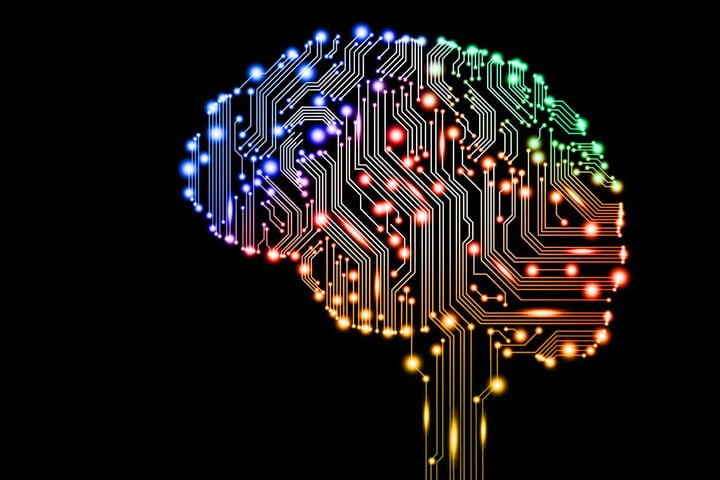
Artificial intelligence, while generating powerful tools for analysis, is only the beginning of a more ambitious phase making AI systems more accurate, less biased, and effective prediction tools. Gathering more and more raw data does not create value. One cannot simply push a button and have valuable output generated. Data needs to be collected, processed, stored, managed, analyzed, and visualized – only then can we begin to interpret the results. Each step is challenging, and every step in this cycle requires massive amounts of work and value-added tools. It’s not just the software and hardware artifacts we produce that will be physically present everywhere and touch our lives all the time, it will be the computational concepts we use to approach and solve problems, manage our daily lives, and communicate and interact with other people. It will be a reality when it is so integral to our lives it disappears. The problems and solutions we address are limited only by our own curiosity and creativity.