
by Nicholas Mitsakos | Economy, Writing and Podcasts
Since major disruptions and market discontinuities occur on a regular basis (every 7 to 10 years is regular enough for this definition), understanding that these opportunities will arise and to be clearheaded about how to best take advantage of them, invest in the long-term, and capture disproportionate returns should be the rule – not the exception. The world may seem riskier, but risk-adjusted returns are much more favorable. Market modulation will interrupt rational pricing. We are having a moment of extreme downward pricing pressure on assets that are perceived as riskier, and upward pressure on prices for safer assets. This can be easily represented by the pricing differential between government securities and lower investment grade fixed income securities. One security has rallied substantially, while spreads between government securities and high-yield debt have widened dramatically.

by Nicholas Mitsakos | Economy, Investment Principles, Public Policy, Writing and Podcasts
The US economy is facing a transitory, but critical, credit emergency beyond the Fed’s normal scope. A new federal credit facility is needed to ensure that sound businesses and households have ready access to cash to get through this crisis. Global business needs a giant bridge loan to get through a tough few months, and governments may need to intervene to make it happen – led by the Fed. The credit markets need substantial additional liquidity, taxes need to be cut to get cash to companies, and banks need to lend and show patience

by Nicholas Mitsakos | China, Economy, Trade, Transformative businesses, Writing and Podcasts
A global economic and political chess game is on between the United States and China. There are many moves, defensive and offensive strategies, short- and long-term gains, but, unlike chess, mutual victory is possible. But only if the U.S. and China understand each piece, all the potential moves, what can be sacrificed, and what victory really looks like. But this does not appear to be happening. Instead of working for mutual benefit, regardless of fundamental cultural and political differences, we are now drawing bright lines demarking battle zones. The result will be economic and technical inefficiency and degradation in the quality of life, safety, and prosperity for everyone.

by Nicholas Mitsakos | Economy, Investment Principles, Writing and Podcasts
Thinking the government now can take over something the private markets provide efficiently and effectively as government is the appropriate entity to provide those services from now on only leads to inefficiency, misuse of capital, the demand for more tax revenue to support the inefficiency, and the downward spiral which ultimately creates more inefficiency that private industry will look to rectify.

by Nicholas Mitsakos | Book Chapter, China, Economy, Investments, Writing and Podcasts
Chinese economic policies and motivations since 2008 not only emphasize growth and sustainability of state-owned enterprises but, a critical but much less well-appreciated dimension is the Chinese government’s emphasis on stability. No economic policy in China will ignore this, and the high value placed on stability pervades all the current trade talks with the United States.

by Nicholas Mitsakos | Book Chapter, China, Economy, Technology, Writing and Podcasts
While it may seem tempting to target attractive market sectors and provide government-backed capital and direction, this typically does not end well. The efficient allocation of capital, demanding an appropriate return for given risks, is something private markets do extremely well. A handful of bureaucrats cannot match the collective wisdom of the capital markets, no matter how attractive the target.

by Nicholas Mitsakos | Economy, Investment Principles, Investments, Writing and Podcasts
High growth companies competing for large total addressable markets may not be creating long-term value. Cheap capital has created a vicious circle of unproductive investment. Markets will correct this overvaluation and misappropriation with a rather unpleasant bang.
by Nicholas Mitsakos | Economy, Writing and Podcasts
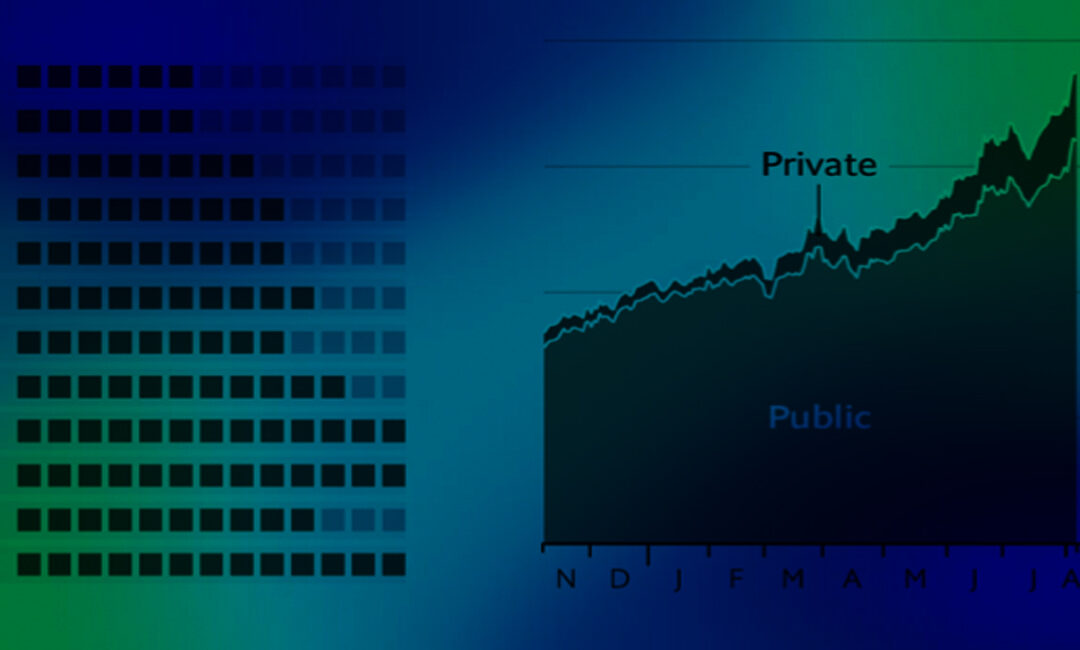
This article was written by Nicholas Mitsakos : Chairman and CEO at Arcadia Capital Group. Over $17 trillion worth of bonds have negative yields. Why? How long will this trend continue? How does this end? Investors looking for safety face unappealing choices....

by Nicholas Mitsakos | Economy, Investment Principles, Public Policy, Writing and Podcasts
While the current trade war commands our immediate attention and thoughts about its impact on the global economy, there are deeper and perhaps more troubling issues regarding globalization and its future.

by Nicholas Mitsakos | Biotechnology, Economy, Investments, Writing and Podcasts
Biotechnology has been beaten up a lot lately and has had a very volatile and unimpressive recent history. However, biotechnology is still one of the single greatest investment opportunities available, and new and exciting factors are developing and enhancing the attractiveness of the sector

by Nicholas Mitsakos | Economy, Writing and Podcasts
Optimism is challenging when looking at the world economy. As the trade war between America and China continues, business confidence in America and elsewhere has been declining.