
by Nicholas Mitsakos | Book Chapter, Digital Assets, Investments, irrationality, Transformative businesses, Writing and Podcasts
It has taken over 30 years for the overnight sensation of the Metaverse, but now hype, money, and large technology companies are charging in. Most obvious and conspicuous is Facebook’s maneuver to change its name to Meta Platforms and commit $10 billion. Microsoft is making a $70 billion acquisition of Activision to mostly focus on Metaverse platform development. Following on top of these two elephants is tens of billions of dollars of venture capital. The opportunity is considered comparable to the original iPhone. None of the iPhone’s component services – mobile phone, computer, camera, and operating system, were new or distinct. The iPhone revolution is the convergence into a single device (or platform) and, most importantly, the entrepreneurial spark that lit millions of application developers to create value from the iPhone platform.
The Metaverse can best be thought of as the intersection of technologies and users. It combines virtual and augmented worlds, virtual assets, digital assets, and gaming into a single platform. However, there doesn’t seem to be anything too disruptive about the Metaverse or Web 3.0. It’s reasonable to be skeptical, and while there is an economic opportunity within the specific creation of Metaverse assets, the real opportunity remains with the infrastructure, intermediaries, picks, shovels, and “the arms dealers” of global digital war.

by Nicholas Mitsakos | Algorithmic Trading, Artificial Intelligence, Financial Technology, Technology, Transformative businesses, Writing and Podcasts
A new vision for artificial intelligence is using smaller more relevant data sets for dynamic learning generating more effective outcomes and better predictions. This model uses cognitive architecture, learns, transfers learning, and retains knowledge – enabling more valuable and compelling artificial intelligence applications. Our approach is more closely related to the brain’s actual structures and much more effective than “neural networks,” which is a catchy name but the similarity to the brain’s actual functioning is in name only. Real advancement in artificial intelligence must live in reality, not theoretical marketing. This video discusses our perspective on the current state of artificial intelligence, the shortcomings of big data and trial and error approaches, and the most effective solution and its prospects. Smaller data sets, more relevant information, dynamic data, and algorithms will lead to more appropriate outcomes, better tools, and more effective applications, especially within Arcadia’s algorithmic trading.

by Nicholas Mitsakos | Digital Assets, Financial Technology, Investments, Transformative businesses, Writing and Podcasts
Arcadia Capital announces its new digital token in partnership with Red Matter.
“Equity tokens issued on a blockchain platform are potentially the most disruptive threat to existing equity markets.” (World Economic Forum)
New digital platforms created by decentralized finance companies, such as Red Matter, integrate securities and other digital assets comprehensively. The platforms enable asset managers like Arcadia to issue, trade, settle, and provide custody services for digital assets, usually consisting of digitally native equity tokens (ICOs). This innovation is exemplified by Arcadia Digital Token Arcadia’s Digital Token.
Digital asset platforms, such as Red Matter, exist in parallel to existing market infrastructure and securities markets. Arcadia’s offering is an alternative digitized version of a typical standard asset management investment in Arcadia’s investment fund. Arcadia Capital is taking advantage of this transformative technology to present an opportunity to any qualified investor anywhere in the world to invest in our digital token.
by Nicholas Mitsakos | Currency, Digital Assets, Financial Technology, Investments, irrationality, Transformative businesses, Writing and Podcasts
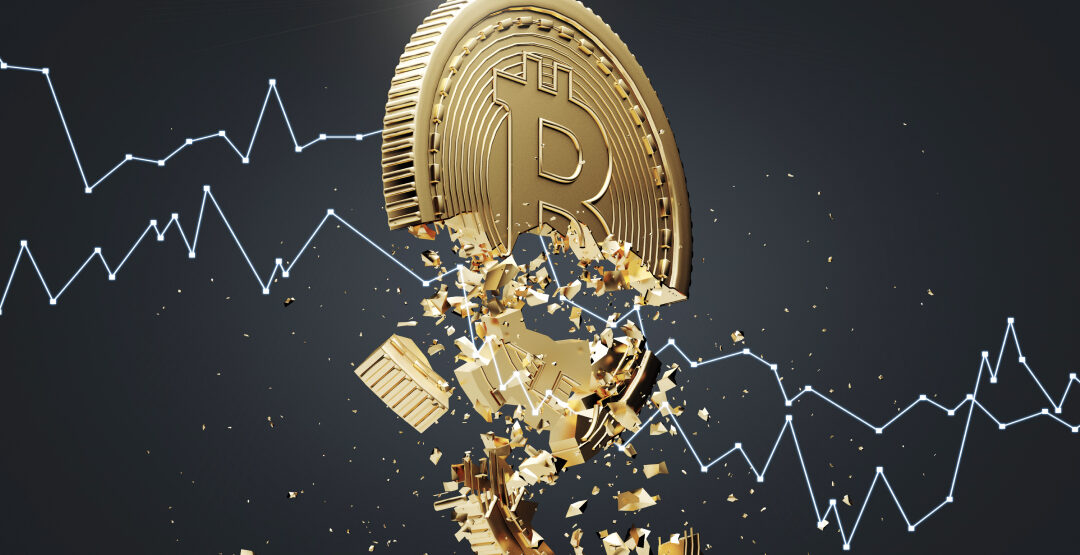
Cryptocurrency staying power has certainly been challenged these last few weeks. There is been a general market drop (even correction), but crypto has been collapsing in value and, to many, is in a death spiral. Of course, reality is more nuanced, and with more detailed analysis, a broad brush hardly seems appropriate. Certainly, the weakest and, honestly, craziest portions of the crypto world have been exposed to be nothing more than silliness. But some components remain resilient. The market is quite effective at sorting the specifics of an otherwise overgeneralized sector. There is no such thing as “crypto.” There are stable and valuable digital assets, globally exchangeable and disruptive. Others have nothing but fluff. Of course, government should insist on more reliable information, and institutions should guard more effectively against fraud. But, there is wheat among the chaff, and it continues to have the potential to be disruptive, create substantial value, and enhance global prosperity.

by Nicholas Mitsakos | Artificial Intelligence, Biotechnology, Book Chapter, Digital Assets, irrationality, Transformative businesses, Writing and Podcasts
Transformation, or euphemistically, “disruption,” creates great opportunities to capture newly created wealth. But, as industries are transforming and strategic disruption is occurring, quite a lot of absurdity and certainly enough terror are associated with some of these extraordinary opportunities to require much greater analysis and understanding.
There are extraordinary risks associated with anything disruptive and transformational. The first disruptor isn’t always the one who creates the most value or is even a sustainable competitive entity.
Innovation does not mean competitive sustainability. Digital platforms, ranging from the internet to digital assets and cryptocurrency are transforming industries globally. But, along with that comes a lot of hyperbole and typically that is followed by very little substance. Great companies use technological disruption, innovation, and transformation to establish themselves and thrive. But they rarely last. Every company, even the most valuable companies such as Apple, Apple, Amazon, Facebook, Netflix, etc. must dynamically transform to stay competitive and valuable.
Transformations are certain. New entities will become very valuable, legacy companies will diminish, and a handful will transform and thrive.
Transformation and sustainability create and capture great wealth, but are far more challenging to identify, and even more challenging to sustain.

by Nicholas Mitsakos | Biotechnology, Book Chapter, Health Care, Transformative businesses, Writing and Podcasts
While messenger RNA (mRNA) has been catching recent headlines thanks to its ability to fight Covid, the combination of a global pandemic and the miraculous mRNA vaccine development in less than one year (when typical timelines approach 10 years) has made mRNA life science’s overnight sensation even though the underlying scientific knowledge is based on discoveries from over 20 years ago. Still, mRNA has the promise to disrupt life sciences and drug development and create enormous economic value.
There are fantastic fortunes to be made in mRNA technology. Moderna and BioNTech have created over $100 billion of value collectively, as of February 2022. That kind of value creation will not be ignored by a combination of firms within an industry with hundreds of billions to invest. There will be an incredible future of development, capital availability, and industry focus until all potential options are exhausted. But, mRNA has a fantastic future, even if it ultimately lives only in labs and R&D centers spread around the globe. It will become an area of focus for every major pharmaceutical company and most biotechs in some form from now on.

by Nicholas Mitsakos | Book Chapter, Digital Assets, Investment Principles, Technology, Transformative businesses, Writing and Podcasts
Every industry consolidates to a handful of centralized competitors. That will never change regardless of current dreams of decentralization from Web 3.0. Modern computing is a constant struggle between decentralization and centralization. Centralization wins eventually, and it will again. These dynamics, combined with the latest crash that may cool investors’ appetite for all things crypto, suggest that Web 3.0 will not dislodge Web 2.0. Instead, the future may belong to a mix of the two, with Web 3.0 occupying certain niches. Whether or not people keep splurging on NFTs, such tokens make a lot of sense in the metaverse, where they could be used to track ownership of digital objects and move them from one virtual world to another. Web 3.0 may also play a role in the creator economy, assuring intellectual property ownership. NFTs make it easier for creators of online content to make money. In this limited way, at least, even the masters of Web 2.0 see the writing on the wall: on January 20th both Meta and Twitter integrated NFTs into their platforms.
by Nicholas Mitsakos | Book Chapter, Panel Discussion, Podcast, Technology, Transformative businesses, Writing and Podcasts
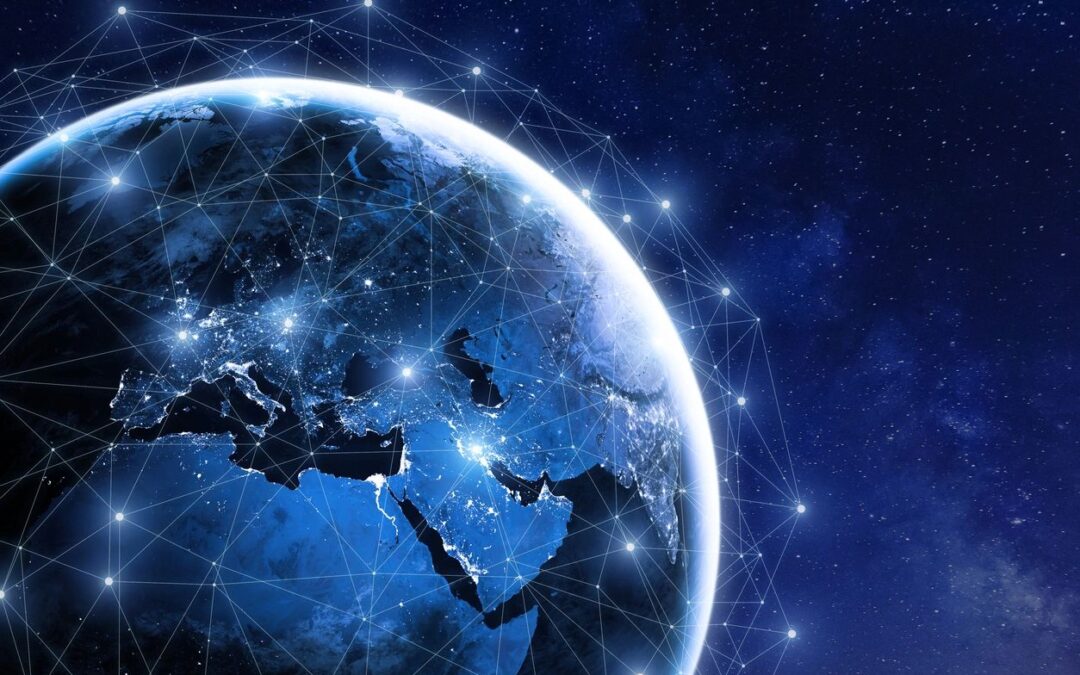
Digital assets are disrupting finance – the world’s largest industry. All assets, intellectual property, and even currency can now be digitized, and anyone can access anything from anywhere. The finance industry is being this intermediated and globalized, economic development and policy will be forever changed.

by Nicholas Mitsakos | Book Chapter, Investments, Technology, The Market, Transformative businesses, Writing and Podcasts
Transformation, Valuation, Employment, and Deflation
Disruption to some of the world’s most important industries, deflationary pressure caused by scaling lower-cost businesses, and sustained low interest rates challenge traditional valuation models. Technological platforms, from blockchain-based businesses to energy storage to DNA sequencing, enable unprecedented disruption to business and economic models.
Interest rates will remain low, equity values will remain high, innovation will drive deflationary pressure, and volatility will be intense and frequent. A new approach is required to understand dynamic global competition and sustainable value.
by Nicholas Mitsakos | China, Economy, Trade, Transformative businesses, Writing and Podcasts
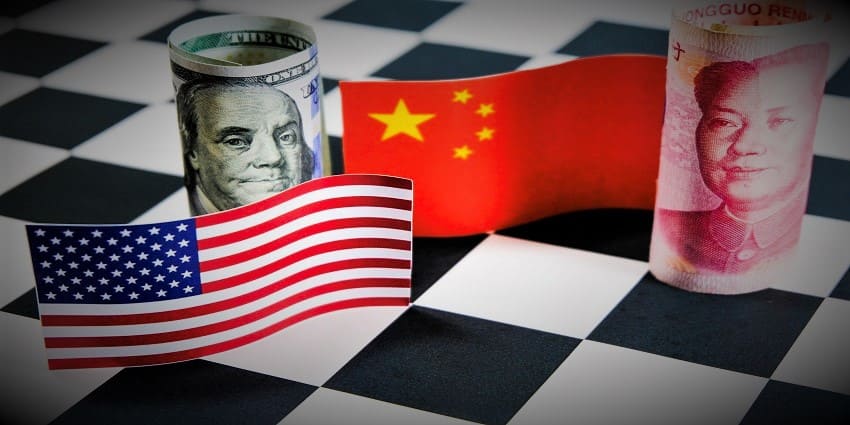
A global economic and political chess game is on between the United States and China. There are many moves, defensive and offensive strategies, short- and long-term gains, but, unlike chess, mutual victory is possible. But only if the U.S. and China understand each piece, all the potential moves, what can be sacrificed, and what victory really looks like. But this does not appear to be happening. Instead of working for mutual benefit, regardless of fundamental cultural and political differences, we are now drawing bright lines demarking battle zones. The result will be economic and technical inefficiency and degradation in the quality of life, safety, and prosperity for everyone.