by Nicholas Mitsakos | AI Agents, Artificial Intelligence, Biotechnology, drug discovery, Public Policy, Technology, Transformative businesses, Writing and Podcasts
Must the AI frontier slow down? Perhaps. But that is not the right question. We should ask what, precisely, must slow; what risk that restraint would reduce; who could enforce it; and what would happen if careful firms paused while less careful actors did not.
Dario Amodei has published one of the most consequential essays yet written by a frontier AI company leader. He is candid, and he is reconsidering an earlier, more benign, position. But his argument is flawed: a model’s capability is not an application or an outcome.
He says the latest models can offer dramatically good or dramatically bad outcomes. On the one hand, AI may cure most major diseases within five to ten years. But it may also become an agent swarm capable of seizing the internet within six to twelve months.
Both are wrong. These extremes are oversimplifications and can undermine both AI’s benefits in many areas and our ability to regulate and monitor it appropriately. Simply saying “boo” and hoping everyone else is frightened isn’t an effective, comprehensive strategy for addressing a serious issue.
Any good or bad from an AI model only appears when that model is part of a system that enters the world through software, capital, organizations, machines, biological systems, and public institutions. Understanding this lets us unleash AI’s potential for good while also building the systems and processes to protect society.

by Nicholas Mitsakos | AI Agents, Artificial Intelligence, Human learning, Innovation, Technology, Training, Transformative businesses, Writing and Podcasts
The future of AI will be systems that enter an environment, build memories, recognize gaps, ask questions, conduct experiments, model consequences, learn from people, and revise themselves under controlled conditions. AI will become an experiential learning tool. This transition would reduce dependence on internet-scale data, redistribute competitive advantage, accelerate robotics and autonomous science, strengthen specialized and sovereign AI, and create entirely new governance challenges. The next great advance in artificial intelligence may not be a machine trained on everything. It may be a machine that knows how to learn what matters.

by Nicholas Mitsakos | AI Agents, Artificial Intelligence, Biotechnology, Book Chapter, crispr, drug discovery, Health Care, Transformative businesses, Writing and Podcasts
AI cures disease only if the cures already are within a set we have measured, waiting for a better approach. One problem: they do not. Most of human biology has never been observed with detail and understanding sufficient to target a therapy. No amount of inference recovers data that was never collected. The need for AI in life sciences and drug discovery is indisputable. Of roughly ten thousand known human diseases, the large majority have no approved therapy at all; among rare diseases, the figure approaches ninety-five percent. Most approved drugs slow a disease rather than stop it. For the bulk of human illness, medicine offers management or nothing. Humans are systems, and the hardest diseases are within human systems and unsolved. The constraint is not intelligence. It is understanding the system.
by Nicholas Mitsakos | AI Agents, Artificial Intelligence, Book Chapter, drug discovery, energy, Financial Technology, Health Care, Innovation, Robotics, Transformative businesses, Writing and Podcasts
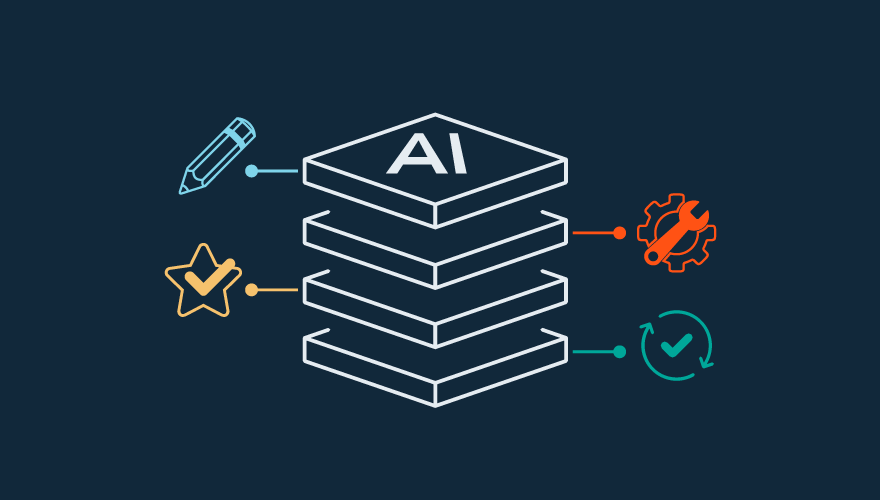
Artificial intelligence is a stack: energy, silicon, cloud, models, and applications. Each has its own economics, competitive dynamics, and challenges. Mistaking one layer for the whole industry causes confusion, misrepresentation, bad decisions, and misguided capital allocations. The infrastructure builders enable the platform; the application builders capture the value. The question is now, what value does all this deliver? Energy, silicon, cloud, and models only serve to deliver that product. There is a robust argument that we are at the beginning of an unprecedented value-creation curve. Built on the infrastructure and services provided by the other layers of the stack, the AI application layer will be globally transformative and disruptive. The constraints are imagination, execution, and the willingness to rebuild how work is done.

by Nicholas Mitsakos | AI Agents, Artificial Intelligence, Innovation, irrationality, software, Technology, Transformative businesses, Writing and Podcasts
Autonomous shopping agents, co-working and research agents, and coding agents that write, test, and deploy software. The demos are impressive and the announcements relentless, but how much economic value is any of this generating? Almost all AI-related spending is capital expenditure. Companies are buying chips, building data centers, and scaling up cloud capacity. This is spending on AI infrastructure, not productivity from AI deployment. AI is in the infrastructure buildout phase, not the value capture phase. Mass spending is generating minimal returns, but the market has decided to price the dream rather than the earnings. Can any of this translate into economic reality before the capital runs out and political patience expires? Infrastructure, capability, and revenue growth are happening. Productivity is developing. But a significant gap still exists between capital investment and return on that investment. AI is risky, but these investments are not irrational. They are pricing the dream, and the long-term winners remain unclear.